Mosaic app
Team
Designer
Manager (CEO/PM)
Engineers
Project Objectives
Problems
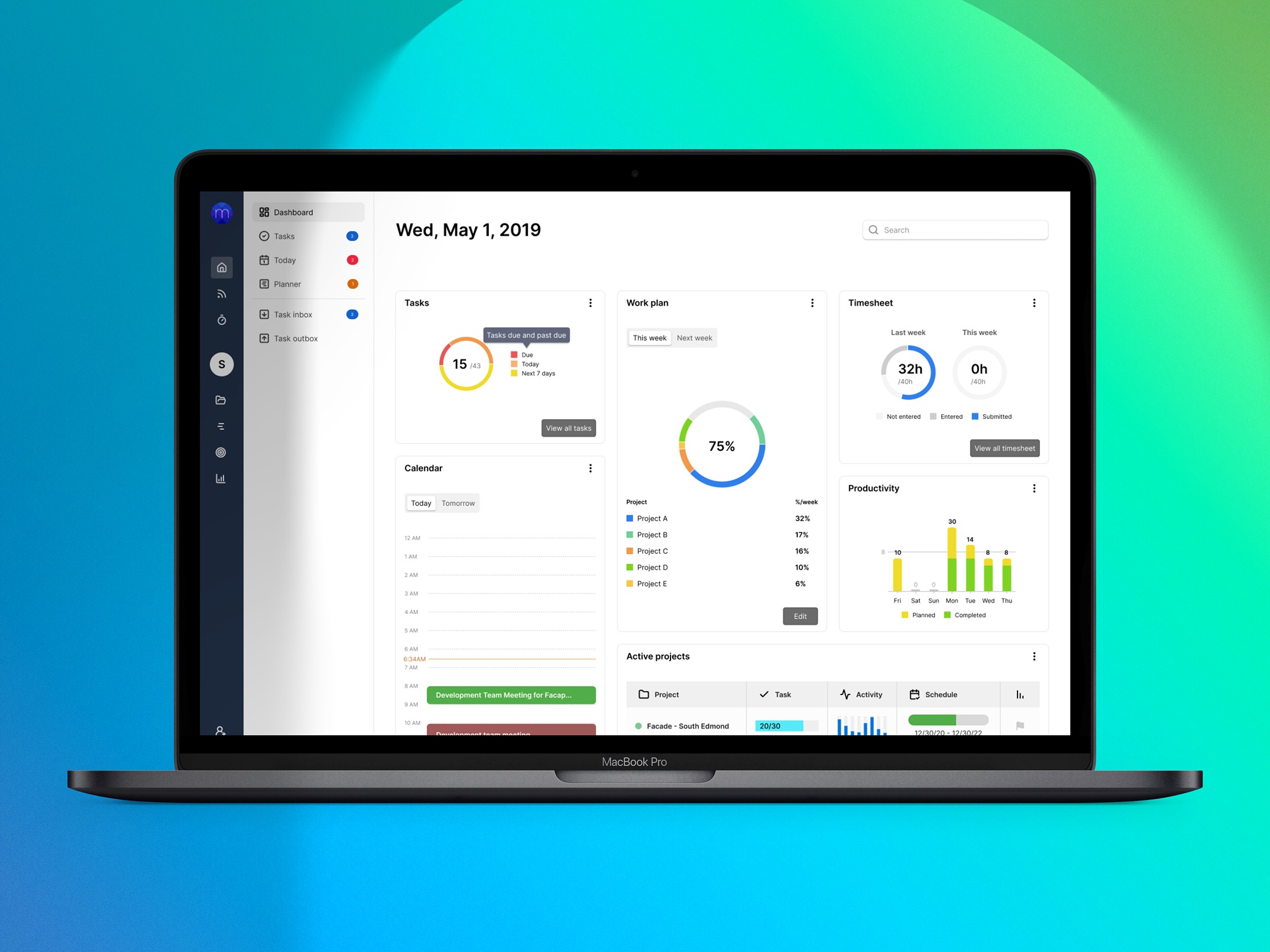
Many organizations rely on spreadsheets to manage their work, leading to communication breakdowns and inefficient task management. Existing software tools are often too limited or feature overwhelming, complex interfaces that deter users. Teams also face additional challenges with frequent meetings, assigning work, and searching for project information. Mosaic seeks to address these pain points by offering a single platform for communication, project scheduling, budgeting, and task management. This reduces the time, effort, and overhead involved in tracking projects and ensures teams stay better connected and on schedule.
Discovery
People’s use of the product varies based on their role, tasks, and expertise. To understand different user workflows, my co-designer and I sought insights into the key factors shaping their work and its broader company impact. Our goal was to: • Identify the company’s internal hierarchy. • Generalize each role’s primary focus. • Pinpoint workflow bottlenecks. • Empower users to enhance productivity.
Insights
After the initial contextual inquiry with different members of a participating organizations, the following insights were obtained: **A Generic Overview** - Managing small teams becomes very cumbersome when there are a lot of projects - Higher management needs an overview of on-going processes and projects - Employees want to plan their assignments which change on a daily **Project Management** - Each employee and manager work on multiple projects simultaneously - Project schedules depend on one another - Owners need an overview, managers are concerned with scheduling and budgeting, workers deal with the execution **Task Assignment** - Employees note down each day's tasks on paper - Tasks are weighed in terms of deadlines and priorities - Tasks are reviewed and approved, after which they're considered done **Communication** - Many things get lost in email threads and text messages - Some tasks and projects updates need to be tracked and communicated in real-time
Design system
Initially, management was unfamiliar with the concept of a design system, making it challenging to communicate its value or justify the investment. We started by creating a lightweight UI library just for the internal design team, focusing on a light, clean theme. After numerous trials and errors, we settled on Open Sans for its optimal readability. While this library was not shared with engineering at first, it allowed us to refine our approach and prepare for future expansion. As the project matured, the engineering team recognized the design system’s potential to save time and reduce costs. With their support, we expanded the effort into a full design system, marking my first hands-on experience in building one. A blue theme was chosen, informed by user research on color perception, to reinforce a professional yet approachable feel.
Project images
test test
Newer
Older